Best Fabes con Almejas Near Me: Ingredients, Flavor and Ordering Tips
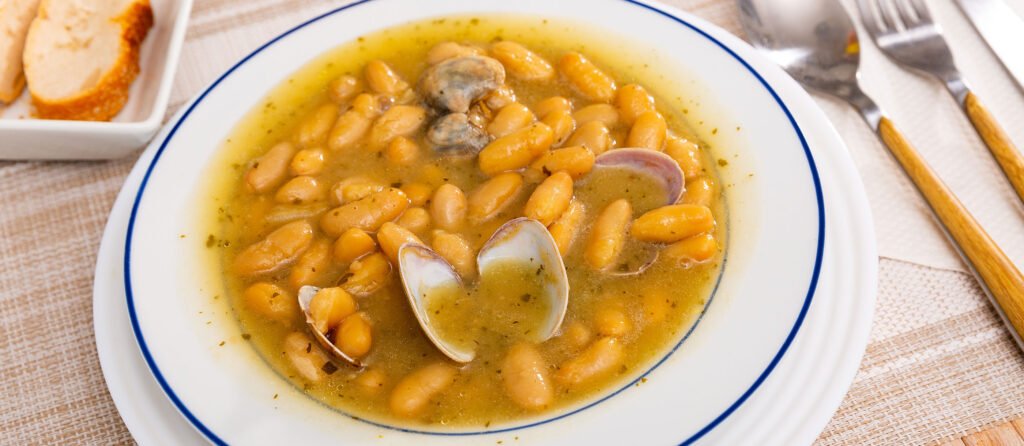
abes con almejas is closely associated with Asturian cuisine in northern Spain. Spain’s official tourism website identifies the dish with the Principality of Asturias and lists fabes de la granja, clams, olive oil, onion, garlic, bay leaf, sweet paprika, bread and salt among its ingredients.
The combination may sound simple, but the quality of the ingredients and the cooking technique make a major difference. Tender beans, fresh clams and a carefully developed broth are the foundation of a memorable plate.
What Does “Best Fabes con Almejas Near Me” Mean?
The keyword “best fabes con almejas near me” combines three ideas: the dish itself, a quality preference and a local search.
“Fabes con almejas” refers to beans prepared with clams, while “best” suggests that the person wants a highly regarded or particularly authentic version. “Near me” indicates that convenience and geographic proximity matter.
For this reason, someone searching the phrase may be comparing Spanish restaurants, Asturian restaurants, seafood restaurants, tapas establishments or specialty chefs.
The exact options depend heavily on location. A restaurant may also offer the dish only on certain days, as a seasonal special or through advance ordering.
What Is Fabes con Almejas?
Fabes con almejas is an Asturian bean-and-clam dish made by combining tender beans with fresh clams and a seasoned broth. It is generally served hot and works as a substantial main course or traditional first course.
Spain’s official tourism recipe uses fabes de la granja, clams, olive oil, onion, garlic, bay leaf, sweet paprika, bread and salt. The beans are cooked slowly until tender, while the clams are opened separately before being combined with the bean preparation.
Other established Spanish recipes use ingredients such as parsley, white wine, saffron, garlic, leek and olive oil. That variation demonstrates that there is more than one legitimate way to prepare the dish.
Where the Dish Comes From
Fabes con almejas belongs to the culinary tradition of Asturias, a region on Spain’s northern coast.
Turismo Asturias presents several versions of the dish through its official gastronomy material, including recipes associated with Asturian restaurants. One version uses fabes de la granja together with clams, parsley, onion, leek, garlic, paprika, saffron, wine and olive oil.
The dish brings together two ingredients strongly connected with the region’s food culture: beans from the land and seafood from the coast.
That combination gives the dish its distinctive character. It is hearty without depending on the heavy pork-based ingredients associated with traditional fabada.
Why the Dish Is Special
The appeal of fabes con almejas comes from its contrast.
The beans should become soft and creamy, while the clams add a fresh maritime character. The broth connects the two components and carries the aromas of garlic, onion, olive oil, parsley, wine or other seasonings depending on the recipe.
This creates a dish that can feel both rustic and refined.
It is also a good example of how Spanish regional cooking often makes a small number of carefully chosen ingredients work together instead of relying on a long list of complicated components.
Traditional Ingredients
Recipes vary, but several ingredients appear frequently.
Fabes, particularly fabes de la granja, are central to the dish. Spain’s official tourism recipe specifically calls for one kilogram of fabes de la granja alongside one kilogram of clams.
Clams provide the seafood element. Onion and garlic form part of the aromatic base, while olive oil adds richness.
Depending on the recipe, you may also find bay leaf, parsley, paprika, saffron, leek, white wine, chili, bread or flour.
Turismo Asturias demonstrates this variation through recipes that use ingredients such as saffron, wine, garlic, parsley and chili.
The Importance of Asturian Beans
The beans are not merely an accompaniment.
The quality of the bean strongly affects the final texture of fabes con almejas. A good bean should cook until tender while retaining enough structure to avoid becoming completely broken down.
Official Asturian tourism material specifically highlights fabes de la granja in its recipes. Another Turismo Asturias preparation identifies the dish with fresh or dried fabes and gives detailed cooking instructions for achieving the desired texture.
When eating the dish at a restaurant, asking whether the kitchen uses traditional Asturian fabes can be an interesting way to understand its approach.
What Makes Good Fabes con Almejas?
A good plate should have balance rather than simply a large portion.
The beans should be tender and creamy, the clams should taste fresh, and the sauce should bring the two together without becoming excessively salty or oily.
The official Spain tourism preparation describes the finished dish as relatively thick, with only a small amount of sauce.
That is useful when evaluating a restaurant version. A watery bowl does not necessarily mean poor quality, because recipes differ, but a well-integrated broth should carry plenty of flavor.
The Role of Fresh Clams
Clams are particularly important because seafood quality can immediately affect the dish.
Recipes from Spanish cooking sources commonly have the clams opened separately before they are incorporated into the beans. This allows the cook to manage the seafood and its cooking liquid carefully.
A good restaurant should take care with the clams so that they remain tender rather than becoming rubbery.
Freshness, proper cooking and clean seafood flavor are essential qualities to look for.
Texture and Broth
Texture may be one of the easiest ways to judge a well-made bowl.
The beans should be soft without being completely mushy. The broth should have enough body to coat the beans while remaining comfortable to eat with a spoon.
Turismo Asturias recipes emphasize gentle cooking and combining the clams toward the end of preparation.
This slow approach allows the beans to develop their texture without aggressively breaking apart.
How Restaurants Prepare It
Traditional recipes can take time.
Spain’s official tourism recipe calls for soaking the beans overnight and then cooking them slowly until tender. The clams are opened separately, while a garlic, bread and paprika preparation is incorporated before the final combination.
Other recipes use white wine, parsley, saffron or seafood stock. Canal Cocina’s versions show several approaches, including slow cooking of the beans and separate preparation of the clams before combining everything.
This means restaurant recipes can differ while remaining recognizably connected to the same Asturian dish.
How to Find It Locally
If you are searching for the best fabes con almejas near me, begin with Spanish and Asturian restaurants rather than generic seafood restaurants.
Useful searches include:
- best fabes con almejas near me
- fabes con almejas near me
- Asturian restaurant near me
- Spanish restaurant with fabes con almejas
- Asturian food near me
- Spanish bean and clam stew near me
Because “near me” is location-dependent, restaurant availability can change according to the city and neighborhood.
Always check the restaurant’s current menu or contact the establishment before making a trip.
What to Check Before Ordering
The first thing to check is whether the dish is actually available that day.
Traditional preparations may require significant cooking time, so some restaurants may offer fabes con almejas only as a daily special, weekend dish or advance-order item.
Next, check the ingredients if you have allergies or dietary restrictions.
Ask whether the recipe contains wine, flour, butter, pork products or seafood stock. Recipes vary considerably, so the safest approach is to ask the restaurant directly.
Restaurant Reviews
Reviews can help identify restaurants that consistently prepare the dish well.
Look for comments mentioning bean texture, clam freshness, seasoning, portion size and authenticity rather than relying only on the restaurant’s overall rating.
Recent reviews are especially useful because menus and chefs can change.
Customer photographs can also help you assess whether the restaurant serves the dish in the traditional stew-like style you expect.
When to Enjoy It
Fabes con almejas can be enjoyed whenever a restaurant offers it, but it is particularly attractive during cooler weather, when warm bean dishes are especially comforting.
Its combination of legumes and seafood also makes it a substantial meal.
In Asturias, the dish forms part of a wider regional culinary tradition that celebrates both agricultural products and seafood.
Homemade Versus Restaurant Preparation
Preparing fabes con almejas at home can be rewarding, but it requires patience.
The beans commonly need soaking before cooking, while the clams require separate cleaning and careful preparation. Spain’s official recipe involves cooking the beans slowly and preparing the clams separately before combining them.
A restaurant provides convenience and can offer access to ingredients that may be difficult to find elsewhere.
For a first experience, trying the dish at a reputable Spanish or Asturian restaurant can be an easy introduction to its traditional flavor.
What to Serve With It
Fabes con almejas is already a complete and filling dish, so heavy accompaniments are usually unnecessary.
A simple serving of bread can work well because the thick broth is naturally suited to being enjoyed with bread.
A light starter or fresh salad may also complement the richness of the beans.
When ordering at a Spanish restaurant, asking the staff what they recommend alongside the dish is often the easiest approach.
Nutritional Considerations
Beans provide plant-based protein, carbohydrates and dietary fiber, while clams contribute protein and various micronutrients.
However, the overall nutritional profile depends on the recipe and serving size. Ingredients such as olive oil, butter, flour, bacon or other additions can alter the calorie and fat content.
People with shellfish allergies should avoid the dish unless a qualified professional confirms that a safe preparation is possible.
Those following specific dietary requirements should ask the restaurant about the complete ingredient list rather than assuming that every version follows the same recipe.
Common Mistakes
One mistake is assuming that every Spanish restaurant will serve authentic fabes con almejas.
The dish is specifically associated with Asturian cuisine, so a restaurant with a strong Asturian focus may be a better starting point.
Another mistake is judging authenticity purely by appearance. Different established recipes use different ingredients and techniques. Spain’s official recipe and Turismo Asturias recipes already demonstrate considerable variation.
Finally, do not assume that a highly rated restaurant always has the dish available. Always check the current menu.
Cultural Importance
Fabes con almejas represents an appealing meeting point between the land and the sea.
Asturias has a strong food identity built around local ingredients, traditional preparation and regional recipes.
The dish combines the substantial quality of beans with the delicate flavor of clams, creating something that feels distinctly different from meat-heavy bean dishes.
That is part of what makes it interesting for anyone wanting to experience Asturian cuisine beyond fabada.
Fun Facts
Fabes con almejas is also known as fabes con amasueles in Asturian, according to culinary references.
The dish has multiple recognized preparations. Some recipes use saffron and white wine, while others emphasize paprika, garlic, parsley or other aromatics.
The official Spain tourism recipe recommends presenting the dish in a deep serving dish or earthenware casserole, which suits its traditional character.
The dish also demonstrates how seafood and legumes can work together in a single traditional preparation.
How to Choose the Best One
When comparing local options, consider five things: authenticity, ingredients, freshness, reviews and availability.
A restaurant with a strong Spanish or Asturian identity is worth considering. Look for evidence that the kitchen uses quality beans and fresh clams.
Check recent reviews for comments about the dish specifically.
Finally, confirm availability before visiting. A restaurant may prepare fabes con almejas only on particular days.
Final Thoughts
The search for the best fabes con almejas near me is ultimately about finding a good representation of an important Asturian dish.
The classic combination of tender fabes and fresh clams creates a satisfying contrast between creamy beans and delicate seafood. Official Spanish and Asturian sources show that recipes can include onion, garlic, olive oil, parsley, paprika, saffron, wine, bay leaf and other ingredients depending on the cook.
When choosing a local restaurant, look beyond general ratings. Check the menu, read recent dish-specific reviews, ask about availability and confirm ingredients.
A well-made bowl should feel balanced, comforting and distinctly connected to Asturian cooking.
If you are searching for it outside Asturias, finding a restaurant that specializes in Spanish or Asturian cuisine can be the best starting point.
FAQs
What is fabes con almejas?
Fabes con almejas is a traditional Asturian dish made with beans and clams. It is generally cooked slowly with aromatics and served as a warm, substantial dish.
What ingredients are used in fabes con almejas?
Common ingredients include fabes, clams, onion, garlic and olive oil, while recipes may also contain parsley, paprika, saffron, bay leaf, leek or white wine.
Where does fabes con almejas come from?
The dish is associated with Asturias in northern Spain and is part of the region’s traditional cuisine.
How can I find the best fabes con almejas near me?
Search for Asturian or Spanish restaurants, check recent reviews, look for the dish on the current menu and call ahead to confirm availability.
Is fabes con almejas the same as fabada?
No. Fabes con almejas focuses on beans and clams, while traditional fabada is a different Asturian bean dish commonly associated with pork products and sausages. The two dishes share the importance of Asturian beans but have different preparations.