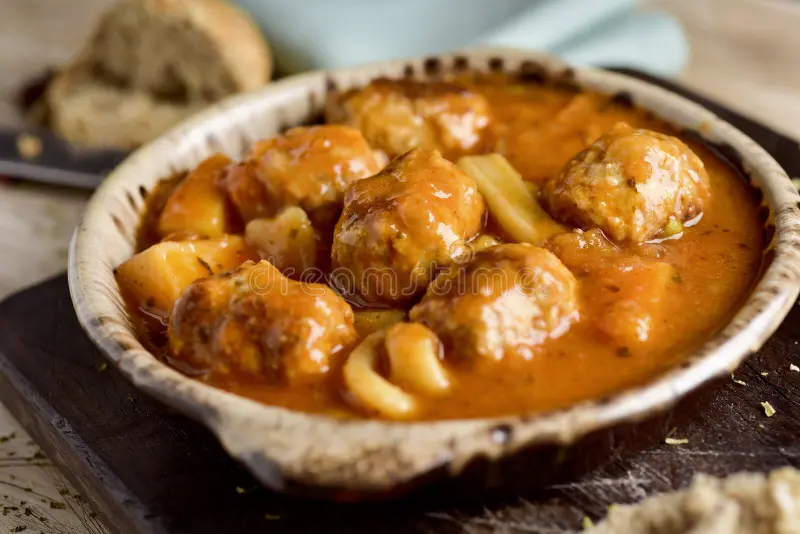

Although albóndigas con sepia is not available at every Spanish restaurant in the United States, it can be found at restaurants specializing in traditional Spanish cooking. One confirmed example is Spanish Diner at Mercado Little Spain in New York City, where the dish is prepared with Ibérico pork meatballs, cuttlefish and fried potatoes.
For people searching throughout the USA, understanding the dish first makes it much easier to identify a restaurant that prepares it properly.
What Is Albóndigas Con Sepia?
Albóndigas con sepia translates broadly to meatballs with cuttlefish. “Albóndigas” means meatballs, while “sepia” refers to cuttlefish.
The combination may sound unusual to diners unfamiliar with Spanish cuisine, but it reflects a long-standing tradition of combining seafood with meat in Mediterranean cooking.
The meatballs provide a rich, savory base, while cuttlefish contributes a delicate seafood character and a firm, slightly chewy texture. Depending on the recipe, the ingredients are cooked together with a flavorful sauce that allows the two components to complement each other.
At Spanish Diner in New York, the current menu describes its version as Ibérico pork meatballs, cuttlefish and fried potatoes.
Why This Dish Is Special
What makes albóndigas con sepia interesting is the contrast between its ingredients.
Traditional meatballs usually rely on beef, pork, poultry or a combination of meats. Cuttlefish introduces a completely different flavor profile without overpowering the meat.
The result can be hearty without feeling like a standard meat-based entrée. The combination of tender meat, seafood and a deeply seasoned sauce gives the dish its distinctive character.
For American diners who enjoy Spanish tapas, Mediterranean seafood or slow-cooked comfort food, this can be an especially appealing choice.
Main Ingredients
Recipes vary between restaurants, but several ingredients commonly define albóndigas con sepia.
Meatballs are usually made from seasoned meat, with pork being one option. Some versions may use beef, while others use a combination.
Cuttlefish is the seafood component. It belongs to the same broad family of cephalopods as squid but has its own texture and flavor.
Sauce provides much of the dish’s character. Spanish preparations may use tomato, onions, garlic, olive oil, herbs, wine or other seasonings.
Potatoes can accompany the dish as a side. At Spanish Diner, the listed preparation includes fried potatoes.
How Does It Taste?
The flavor of albóndigas con sepia depends heavily on the recipe and cooking technique.
The meatballs typically provide a rich, savory and comforting flavor, while the cuttlefish adds a mild marine note. A well-made sauce brings the ingredients together instead of allowing one component to dominate.
Texture is equally important. Good meatballs should remain tender rather than dry, while properly prepared cuttlefish should have a pleasant bite.
If you enjoy dishes that combine seafood and meat, the pairing can feel balanced and satisfying.
Spanish Food Culture
Albóndigas con sepia fits into a broader Spanish culinary tradition in which seafood, meat, vegetables and sauces are combined in practical but flavorful dishes.
Spain has many regional preparations that differ considerably from one another. Catalan and Mediterranean cooking, in particular, is known for combinations of ingredients that might initially seem unusual to American diners.
This is part of what makes Spanish cuisine interesting. The goal is not simply to separate meat and seafood but to create harmony between different flavors.
That culinary approach can be experienced in restaurants serving traditional Spanish dishes throughout major American cities.
Finding It in the USA
Searching for “best albondigas con sepia near me” can be challenging because the dish is considerably more specialized than popular Spanish foods such as paella, patatas bravas or tortilla española.
A restaurant may serve Spanish cuisine without carrying albóndigas con sepia on its regular menu.
The best approach is to search specifically for:
- “albóndigas con sepia”
- “meatballs with cuttlefish”
- “Spanish meatballs cuttlefish”
- “Catalan meatballs with cuttlefish”
- “Spanish seafood meatballs”
Checking the restaurant’s current menu before visiting is also important because specialty dishes can be seasonal or occasionally unavailable.
A New York Example
One of the clearest documented USA examples is Spanish Diner at Mercado Little Spain in New York City.
Its menu currently lists Albóndigas Ibéricas con Sepia, described as Ibérico pork meatballs, cuttlefish and fried potatoes. The listed price on the main menu is $19.
Another current menu listing for Spanish Diner shows Albóndigas con Sepia y Patatas Fritas for $23, describing the dish as Ibérico pork meatballs with cuttlefish, tomato sauce and crispy potatoes.
The restaurant’s online ordering listing also shows a ready-to-heat version of albóndigas con sepia featuring Ibérico pork meatballs, cuttlefish and fried potatoes.
This makes New York a useful starting point for American readers specifically seeking this Spanish specialty.
What Makes a Good Restaurant?
When choosing a restaurant, do not judge the dish only by its name.
Look for a restaurant that demonstrates a broader commitment to Spanish cooking. A menu featuring Spanish ingredients, regional dishes and traditional preparations can be a good indication that the kitchen understands the cuisine.
It is also useful to check whether the restaurant describes the type of meat used, how the cuttlefish is prepared and what accompanies the dish.
Restaurants that provide specific ingredient information often make it easier for diners to understand what they are ordering.
Meatball Quality
The meatball is one half of the dish, so its quality matters considerably.
A good meatball should have enough moisture to remain tender while still holding its shape. It should also have seasoning that complements rather than overwhelms the seafood.
If the meatballs are overly dry, heavily fried or excessively seasoned, they can dominate the dish.
Tenderness is one of the simplest signs of a carefully prepared albóndigas dish.
Cuttlefish Quality
Cuttlefish is equally important.
Poorly prepared cuttlefish can become unpleasantly tough or rubbery. Proper cooking requires attention to timing and temperature.
When prepared well, cuttlefish should have a satisfying texture and a clean seafood flavor.
Its role is not to overpower the meatballs. Instead, it should add another layer of flavor and texture to the overall dish.
Sauce Matters
The sauce can determine whether the entire plate feels cohesive.
A balanced sauce should complement the meatballs and cuttlefish while providing enough moisture for the dish.
Tomato-based versions can offer sweetness and acidity, while other preparations may emphasize garlic, onions, olive oil, wine or herbs.
When dining out, consider asking your server how the dish is prepared. A simple question about the sauce can tell you a lot about what to expect.
Side Dishes
Potatoes are a natural pairing for albóndigas con sepia.
Spanish Diner’s version is served with fried potatoes, giving the meal a crisp element alongside the softer meatballs and seafood.
Depending on the restaurant, you might also find the dish with bread, vegetables, rice or another Spanish-style accompaniment.
A good side should support the main dish rather than compete with it.
Nutritional Considerations
Albóndigas con sepia contains a mixture of protein-rich ingredients, but its nutritional profile depends heavily on the recipe.
The meatballs contribute protein and fat, while cuttlefish also provides protein and several micronutrients.
The sauce, cooking oil and side dishes can significantly change the calorie and fat content.
If nutrition is important to you, ask about preparation methods and portion sizes. A dish served with fried potatoes and a rich sauce will naturally differ nutritionally from a lighter preparation served with vegetables.
Potential Benefits
There are several nutritional reasons why someone might enjoy this dish as part of a balanced diet.
Protein from meat and cuttlefish can contribute to a satisfying meal.
Seafood can add nutrients that are not always prominent in meat-centered dishes.
Olive oil, when used as part of the preparation, is a traditional feature of many Mediterranean-style dishes.
However, it would be misleading to describe albóndigas con sepia as a health food automatically. Portions, cooking methods and accompanying ingredients matter.
The best approach is to enjoy it as part of a varied diet.
Typical Price in the USA
Prices vary considerably depending on the restaurant, city, ingredients and portion size.
New York’s Spanish Diner provides a useful current reference point, with its menu listing albóndigas con sepia at $19, while another menu listing shows a version with fried potatoes at $23.
Specialty Spanish restaurants in major metropolitan areas may charge more than casual establishments.
It is therefore better to check the restaurant’s current menu before visiting rather than relying on an old price found through a search engine.
How to Order
If you see albóndigas con sepia on a menu, you can simply ask what comes with the dish.
Useful questions include:
- Is the cuttlefish cooked in the same sauce as the meatballs?
- What type of meat is used?
- Does the dish contain pork?
- What side comes with it?
- Is the dish spicy?
- Is it available today?
These questions are particularly helpful if you have dietary restrictions or simply want to know what to expect.
Delivery and Takeout
Some restaurants may offer albóndigas con sepia for takeaway rather than serving it exclusively as a dine-in dish.
Spanish Diner’s current online ordering menu lists a ready-to-heat Albóndigas con Sepia option made with Ibérico pork meatballs, cuttlefish and fried potatoes.
This is useful for diners who want to enjoy the dish at home.
However, delivery availability can change according to location, time and restaurant operations. Always check the current ordering page before placing an order.
Homemade Version
If you cannot find albóndigas con sepia nearby, preparing a version at home is another possibility.
A basic approach involves preparing seasoned meatballs, preparing cuttlefish separately, then bringing the components together in a flavorful Spanish-style sauce.
The key is avoiding overcooked seafood and keeping the meatballs moist.
For a more traditional experience, Spanish ingredients such as extra-virgin olive oil, garlic and suitable Spanish seasonings can help create the desired flavor profile.
Who Should Try It?
This dish is particularly suitable for diners who enjoy Spanish cuisine, Mediterranean flavors, seafood and hearty comfort food.
It can also be a good choice for adventurous diners who want something beyond familiar tapas.
If you already enjoy dishes such as paella, seafood stews, Spanish meatballs or Catalan cuisine, albóndigas con sepia may be worth trying.
People with seafood allergies or dietary restrictions should ask about ingredients before ordering.
Common Search Mistakes
A search for “best albondigas con sepia near me” can produce confusing results because search engines may mix Spanish restaurants, ordinary meatball dishes and unrelated seafood restaurants.
The word sepia is particularly important. It means cuttlefish, so a restaurant serving ordinary albóndigas does not necessarily offer the dish you are looking for.
Always read the menu description carefully.
A restaurant listing “albóndigas” without mentioning cuttlefish may be serving a completely different preparation.
Final Thoughts
Albóndigas con sepia is a distinctive Spanish dish that brings meatballs and cuttlefish together in one comforting preparation. It may not be as widely available in the United States as paella or traditional tapas, but dedicated Spanish restaurants can provide an authentic version.
For USA-based diners, New York City currently offers a confirmed example at Spanish Diner at Mercado Little Spain, where the dish appears on the menu with Ibérico pork meatballs, cuttlefish and fried potatoes.
When searching for the best version near you, focus on restaurants with strong Spanish menus, verify the current menu before visiting and pay attention to the quality of both the meatballs and cuttlefish.
The right preparation should offer tender meat, well-cooked seafood, a balanced sauce and complementary sides—a combination that makes this Spanish specialty well worth trying.
FAQs
What is albóndigas con sepia?
Albóndigas con sepia is a Spanish dish made with meatballs and cuttlefish. Depending on the recipe, it may include tomato sauce, onions, garlic, olive oil and potatoes.
Where can I find albóndigas con sepia in the USA?
Availability is limited compared with more common Spanish dishes. Spanish Diner at Mercado Little Spain in New York City currently lists an Ibérico pork meatball and cuttlefish version with fried potatoes.
What does sepia mean in Spanish cuisine?
In this context, sepia means cuttlefish, a cephalopod related to squid. It has a distinctive seafood flavor and firm texture.
Is albóndigas con sepia healthy?
It can provide protein from both meat and seafood, but the overall nutritional value depends on portion size, sauce, cooking method and sides such as fried potatoes.
How much does albóndigas con sepia cost in the USA?
Prices vary by restaurant and city. At Spanish Diner in New York, current menu listings show versions around $19–$23.