Best Arroz con Leche Boliviano Near Me: A Taste of Bolivian Tradition
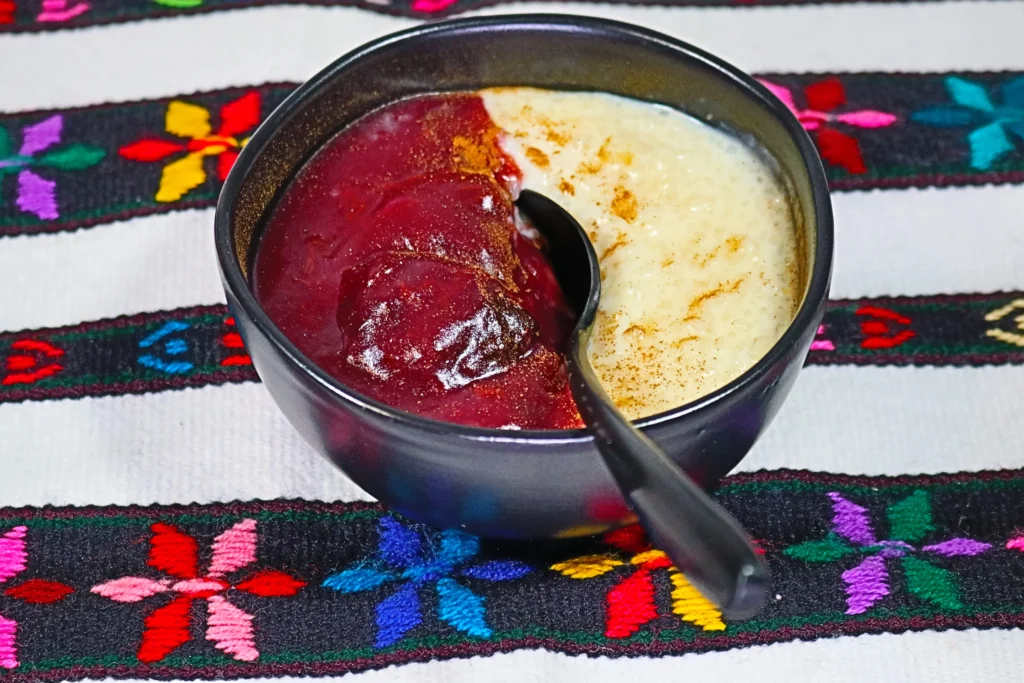
When someone searches for “best arroz con leche boliviano near me,” they are usually looking for more than a simple rice pudding. They want a creamy dessert with the familiar aroma of cinnamon, the softness of properly cooked rice, and the comforting character associated with Bolivian home cooking.
Arroz con leche is popular throughout Latin America, but recipes vary from country to country and even from one household to another. Bolivian versions commonly combine rice, milk, sugar, cinnamon, and sometimes lemon or orange peel, cloves, butter, evaporated milk, or other ingredients. (Bolivia Bella)
For that reason, finding the best local version requires looking beyond a restaurant’s name. Preparation, texture, freshness, ingredients, and regional style all matter.
What Is Arroz con Leche Boliviano?
Arroz con leche boliviano is a traditional creamy rice dessert prepared with cooked rice and milk. Sugar provides the sweetness, while cinnamon gives it the characteristic warm aroma.
Bolivian recipe sources describe the dessert as a popular traditional preparation that can be enjoyed as a dessert or snack. One Bolivian recipe specifically presents it as a dessert associated with family traditions and everyday enjoyment.
The finished dessert can range from relatively loose and spoonable to thick and intensely creamy, depending on the quantity of milk, cooking method, rice variety, and additional ingredients.
That flexibility is one reason why two restaurants can serve arroz con leche that look and taste noticeably different while both considering their recipes traditional.
A Bolivian Favorite
Arroz con leche has a long history across the Spanish-speaking world, and Bolivian cooks have developed their own versions using locally familiar ingredients and family techniques.
A Bolivian cookbook describes arroz con leche as part of family celebrations and recalls it being prepared alongside other foods during Easter gatherings.
Another Bolivian culinary source describes the dessert as particularly popular during Semana Santa, while noting that each country has its own way of preparing it.
This gives the dish an important cultural dimension. It is not simply rice mixed with milk; for many families, it is connected with memories, celebrations, relatives, and traditional cooking.
Main Ingredients
The basic ingredient list is surprisingly short.
Rice provides the structure. Short- or medium-grain rice can produce a particularly creamy result because of its starch, although Bolivian recipes also use ordinary long-grain rice.
Milk provides the creamy base. Whole milk is commonly preferred when a rich texture is desired.
Sugar supplies sweetness, although the amount varies considerably between recipes.
Cinnamon is one of the most recognizable flavorings. It may be added as a whole stick during cooking and finished with ground cinnamon.
Lemon peel can provide a gentle citrus aroma. Some recipes use orange peel instead.
Additional ingredients may include cloves, butter, evaporated milk, condensed milk, raisins, coconut, or fruit, depending on the recipe.
What Makes It Different?
There is no single official formula that makes every bowl “Bolivian.” Instead, the identity comes from traditional ingredients, preparation methods, family recipes, and local food culture.
One Bolivian recipe uses rice, milk, sugar, cinnamon, lemon rind, and butter. The rice is cooked and then gradually combined with heated milk infused with cinnamon and lemon.
Another Bolivian recipe uses rice, milk, cinnamon, cloves, and sugar, with the rice soaked in milk before being cooked slowly.
These differences show why the best local bowl may not look exactly like another Bolivian arroz con leche.
Authenticity can have more than one expression.
Flavor and Texture
Texture is arguably the most important quality when judging arroz con leche.
A well-made version should have soft, fully cooked rice surrounded by a creamy mixture. It should be thick enough to feel substantial but not so dry that it resembles ordinary cooked rice.
The flavor should be sweet without becoming overwhelmingly sugary.
Cinnamon should provide warmth rather than dominate every other ingredient. If lemon or orange peel is included, it should contribute a subtle aromatic freshness.
Clove can provide another layer of warmth, but too much can overpower the dessert.
The best bowl creates a balance between creaminess, sweetness, spice, and rice texture.
How It Is Prepared
Traditional preparation requires patience.
One Bolivian recipe begins by cooking rice and then adding milk gradually while stirring. Cinnamon and lemon peel are used to infuse the milk, and butter is added toward the end.
Another recipe recommends soaking rice in milk before slowly cooking it with cinnamon, cloves, and sugar. It suggests cooking for approximately 20 to 25 minutes, stirring regularly until the mixture becomes creamy.
These methods highlight an important principle: slow cooking and regular stirring help create the desired texture.
A rushed preparation can leave the rice undercooked or produce an uneven consistency.
Hot or Cold?
One of the best things about arroz con leche is its versatility.
A Bolivian recipe source notes that it can be enjoyed hot or cold, making it suitable for different seasons and occasions.
Warm arroz con leche feels especially comforting during colder weather. The cinnamon aroma becomes more noticeable, and the dessert has a soft, freshly cooked character.
Cold arroz con leche becomes firmer and more refreshing. Refrigeration also changes the texture, making it denser.
When ordering, ask the restaurant whether its version is served warm, chilled, or according to customer preference.
Finding the Best Near You
Searching for “best arroz con leche boliviano near me” is a useful starting point, but you can make the search more precise.
Try related phrases such as:
- Bolivian dessert near me
- Bolivian restaurant near me
- arroz con leche Bolivia near me
- Bolivian rice pudding near me
- traditional Bolivian desserts near me
- Latin American dessert near me
A restaurant may serve the dessert without putting the exact phrase “arroz con leche boliviano” in its business name or menu title.
It is also useful to search restaurant menus before visiting. Availability can change from day to day, particularly when arroz con leche is prepared as a homemade-style special.
What to Ask the Restaurant
If authenticity matters to you, a few simple questions can make your choice easier.
Ask whether the dessert is Bolivian-style or a general Latin American arroz con leche.
Ask whether it contains cinnamon, cloves, lemon or orange peel, raisins, condensed milk, or other ingredients.
You can also ask whether it is made fresh in the restaurant.
These questions are particularly helpful if you have allergies, dietary preferences, or simply want a traditional flavor.
A knowledgeable restaurant should be able to explain its recipe without difficulty.
Signs of a Good Dessert
There are several things to look for when the bowl arrives.
The rice should be tender. Hard or crunchy grains suggest insufficient cooking.
The mixture should be creamy. It should not be watery, but it should also avoid becoming excessively dry.
The sweetness should be balanced. Sugar should complement the dairy and spices rather than dominate them.
The aroma should be pleasant. Cinnamon and citrus should smell fresh and natural.
The portion should feel appropriate. A dessert doesn’t need to be enormous to be satisfying.
Presentation can vary, but a simple serving topped with ground cinnamon can be just as appealing as an elaborate restaurant presentation.
Popular Variations
Bolivian arroz con leche has many variations.
Some recipes use evaporated milk for additional richness. A Bolivian cookbook recipe combines ordinary milk with evaporated milk and finishes the dessert with powdered cinnamon.
Other versions may include raisins, coconut, fruit, or jam. Bolivia Bella notes that the dessert can be served with fruit or jam in addition to the traditional cinnamon topping.
Some cooks prefer a relatively loose consistency, while others aim for a thick pudding-like texture.
Family recipes often determine these differences.
Therefore, if you find a version that seems slightly different from one you’ve eaten previously, that does not necessarily mean it is incorrect.
Nutritional Considerations
Arroz con leche is primarily a sweet dairy-and-rice dessert, so its nutritional value depends heavily on portion size and recipe.
Rice contributes carbohydrates, while milk provides protein and minerals such as calcium. However, added sugar can significantly increase the overall sugar and calorie content.
One published Bolivian-style recipe estimates approximately 170 calories per serving, although actual nutritional values vary based on ingredients and serving size.
Commercial recipes can be considerably different. For example, a Nestlé Bolivia recipe uses condensed and evaporated milk and includes raisins and cinnamon.
For a balanced diet, treat arroz con leche as a dessert or occasional sweet snack, rather than assuming that every recipe has the same nutritional profile.
Benefits
Although it is primarily a dessert, arroz con leche has several practical advantages.
It is filling. The combination of rice and dairy makes it more substantial than many light desserts.
It uses familiar ingredients. Rice, milk, sugar, and cinnamon are widely available.
It can be served at different temperatures. This makes it suitable for both warm and cold weather.
It is adaptable. Restaurants and families can adjust sweetness, thickness, spices, and toppings.
It carries cultural value. Family recipes and traditional celebrations give the dessert an importance beyond its ingredients.
These qualities help explain why the dessert has remained popular across generations.
Best Pairings
A simple bowl of arroz con leche can stand on its own, but some pairings work particularly well.
Bolivian sweet bread or biscocho is a traditional-style pairing referenced in a Bolivian cookbook.
Coffee or tea can also complement the dessert, particularly when served warm.
For a lighter contrast, fresh fruit can work well with the creamy texture.
A little extra ground cinnamon is another easy finishing touch.
The key is not to overwhelm the dessert. Its appeal comes from simplicity, so complicated toppings are rarely necessary.
Price and Portions
The price of arroz con leche varies according to location, restaurant type, portion size, and ingredients.
As one current example from Bolivia, Montecristo lists a 200-gram serving for Bs 13 and describes it as a traditional dessert without preservatives.
That figure should not be used as a universal price because restaurant prices differ by country and city.
When comparing local options, consider portion size alongside price. A small handmade serving may be more satisfying than a larger commercially prepared portion with a less distinctive flavor.
Homemade vs. Restaurant
Homemade arroz con leche has one major advantage: personalization.
A family cook can adjust the sweetness, amount of cinnamon, thickness, and milk according to personal preference.
Restaurant versions offer convenience and consistency. A good Bolivian restaurant can also provide a more authentic cultural setting, particularly when the dessert is prepared alongside other Bolivian dishes.
Neither option is automatically superior.
If you want nostalgia and customization, homemade may win. If you’re looking for convenience and a chance to experience Bolivian cuisine outside the home, a restaurant is an excellent choice.
Common Ordering Mistakes
One mistake is assuming that every Latin American restaurant prepares the same style of arroz con leche.
Another is expecting the dessert to have exactly the same thickness as a version you ate elsewhere.
Recipes differ.
A further mistake is choosing a restaurant solely because it appears high in general search results.
Instead, check recent reviews, menu information, photographs, and comments specifically mentioning the dessert.
If possible, choose a restaurant with a clear connection to Bolivian cuisine rather than assuming that every Latin American restaurant serves a Bolivian-style preparation.
Cultural Value
Food often carries memories that cannot be measured by ingredients alone.
Bolivian recipes describe arroz con leche in connection with family gatherings, holidays, childhood memories, and everyday snacks.
That cultural connection helps explain why a simple dessert can be so meaningful.
For someone who grew up eating it, a warm cup of arroz con leche may recall family kitchens and celebrations.
For someone trying it for the first time, the dessert provides a gentle introduction to Bolivian culinary traditions.
Final Verdict
The search for the “best arroz con leche boliviano near me” is ultimately about finding a dessert that combines creaminess, tender rice, balanced sweetness, cinnamon aroma, and authentic preparation.
Bolivian recipes vary, but common ingredients include rice, milk, sugar, and cinnamon, with lemon peel, cloves, butter, evaporated milk, raisins, or other additions appearing in different preparations.
When choosing a local restaurant, don’t judge the dessert solely by appearance or price. Look for fresh preparation, a balanced texture, appropriate sweetness, and a restaurant that understands Bolivian cuisine.
And if you are lucky enough to find a place serving it warm with a fragrant cinnamon topping, take your time with it. Sometimes the simplest desserts are the ones that leave the strongest impression.
FAQs
1. What is arroz con leche boliviano?
Arroz con leche boliviano is a traditional creamy rice dessert made with rice, milk, sugar, and cinnamon. Depending on the recipe, lemon peel, cloves, butter, evaporated milk, raisins, or other ingredients may be included.
2. Is Bolivian arroz con leche served hot or cold?
It can be served either warm or cold. Warm versions are comforting during colder weather, while chilled arroz con leche develops a thicker and more refreshing texture.
3. What makes Bolivian arroz con leche different?
There is no single formula, but cinnamon, slow cooking, creamy milk, and traditional family preparation are common characteristics. Some recipes also use cloves, lemon peel, butter, or evaporated milk.
4. How can I find the best arroz con leche boliviano near me?
Search for Bolivian restaurants and bakeries, then check their menus and recent customer reviews for arroz con leche. Calling ahead is useful because availability may vary.
5. Is arroz con leche a healthy dessert?
It can provide carbohydrates from rice and protein and calcium from milk, but it also commonly contains added sugar. Portion size and recipe ingredients determine its overall nutritional value.