Best Mate de Coca Near Me: A Practical Guide to Coca Leaf Tea
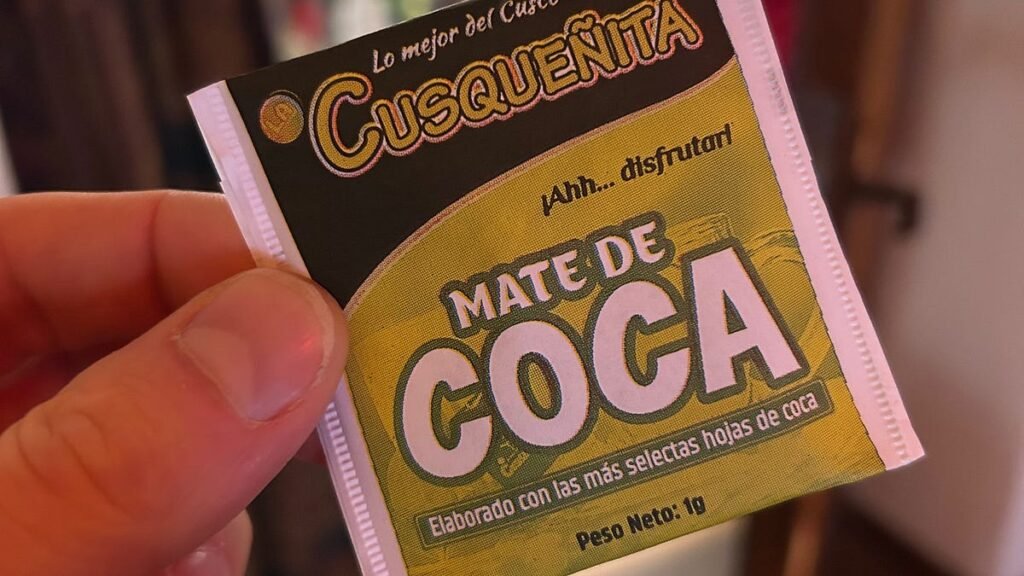
Mate de coca is a hot herbal infusion prepared from coca leaves. The Spanish phrase literally refers to a coca-leaf tea or infusion.
It should not be confused with traditional yerba mate, another South American beverage made from the leaves of Ilex paraguariensis. Despite the shared word “mate,” the plants and beverages are different.
Coca tea is particularly associated with Andean countries. In Peru, it has been consumed traditionally as part of everyday life and hospitality.
The drink generally has a mild herbal, slightly bitter flavor and can be served plain or with ingredients such as sweeteners or citrus in places where it is traditionally consumed.
Where It Comes From
Mate de coca has deep roots in the Andes.
Coca leaves have been used by Indigenous communities in South America for centuries, with traditional applications connected to daily life, work, ceremonies, and high-altitude environments.
Peru and Bolivia are especially well known for coca-leaf products and coca tea. The drink has also been associated with other Andean regions.
This history is important because mate de coca is more than simply a modern tea product. It is connected to longstanding cultural traditions.
Why People Search in the USA
The phrase “best mate de coca near me” is often used by people in the United States who have encountered coca tea while traveling in South America.
Visitors to Peru, for example, may receive mate de coca at hotels, restaurants, airports, or during high-altitude trips.
After returning home, they may search for the same drink locally.
Others may be interested because they have heard about its traditional use in the Andes or want to understand the beverage and its cultural background.
However, a U.S. search should begin with legal and safety considerations rather than simply finding a nearby seller.
Traditional Uses
Coca leaves have traditionally been used in Andean communities for several purposes.
Mate de coca is commonly associated with high-altitude travel, fatigue, digestion, and general refreshment. Traditional accounts describe it as a mildly stimulating beverage.
These traditional uses should not automatically be interpreted as medically proven benefits.
Traditional knowledge and modern clinical evidence are different categories. Someone considering the drink for a health condition should consult a qualified healthcare professional rather than treating coca tea as a medical treatment.
Potential Benefits
Mate de coca is often discussed in connection with several potential benefits.
The most commonly mentioned traditional use is support during high-altitude travel. Coca-leaf preparations have long been consumed in the Andes in mountainous environments.
The beverage may also have mild stimulant properties because coca leaves naturally contain alkaloids. Historical descriptions compare its stimulating effect with other caffeinated or mildly energizing beverages.
However, it is important not to present these traditional claims as established medical benefits.
There is also an important consideration that distinguishes mate de coca from ordinary herbal teas: coca tea can contain cocaine alkaloids. Scientific analysis has demonstrated cocaine and related metabolites in coca-tea samples.
Mate de Coca and Altitude
Altitude is probably the most famous reason people associate coca tea with the Andes.
Travelers in cities such as Cusco commonly encounter coca tea because of the region’s elevation.
Traditional users believe coca preparations can help them cope with the challenges of high-altitude environments. Modern travelers sometimes drink it as part of the local experience.
Nevertheless, mate de coca should not be treated as a proven substitute for medical treatment of altitude illness.
Anyone experiencing serious symptoms at altitude should follow established medical guidance and seek appropriate care.
What Does It Taste Like?
Mate de coca generally has a greenish or yellow-green appearance when prepared as a tea.
Its flavor is usually described as herbal and mildly bitter, with characteristics that some people compare loosely with green tea.
The flavor can vary according to the leaves, preparation method, and product.
In traditional settings, people may add honey, sugar, lemon, or other ingredients to make the drink more pleasant.
The taste itself is not necessarily the main reason people seek it. For many travelers, the drink represents an introduction to Andean culture and hospitality.
Mate de Coca vs. Yerba Mate
These two drinks are frequently confused.
Mate de coca is made from coca leaves.
Yerba mate is made from Ilex paraguariensis and is especially associated with Argentina, Paraguay, Uruguay, and parts of Brazil.
They have different plants, cultural histories, chemical compositions, and legal considerations.
This distinction is particularly important in the United States because searching for “mate” can lead to ordinary yerba-mate products that have nothing to do with coca leaves.
If someone is specifically researching coca tea, the phrase “mate de coca” is much more precise.
Why Finding It in the USA Can Be Difficult
The search phrase “near me” suggests a straightforward local shopping question.
With mate de coca, it is not that simple.
Coca leaves are controlled in ways that ordinary tea leaves are not, and scientific studies have confirmed that coca tea can contain cocaine alkaloids.
Historical U.S. records also show that authorities have dealt specifically with imported mate de coca products. A U.S. Customs ruling classified imported mate de coca containing coca leaves under a tariff category covering coca leaf.
Consequently, people should not assume that a product available in Peru is automatically legal to import, sell, or possess in the United States.
U.S. Legal Considerations
This is the most important section for a USA-focused article.
Coca leaves naturally contain cocaine alkaloids. Research has demonstrated measurable cocaine content in commercially prepared coca tea and has documented positive cocaine-metabolite results after consumption.
Because of this, mate de coca has a very different legal situation from conventional herbal teas.
Historical U.S. medical literature documented coca tea being sold in the country, while later research and government-related records have addressed its controlled nature and importation.
Current laws and enforcement can change, and legality can depend on the precise product, formulation, import status, and circumstances.
Therefore, this article should not be read as legal advice or as a recommendation to purchase or import coca-leaf tea in the United States.
Drug Testing Matters
Another reason USA readers should be cautious is drug testing.
Scientific research has found that drinking coca tea can lead to cocaine metabolites appearing in urine.
One published study reported that consumption of a single cup of Peruvian or Bolivian coca tea produced positive testing for cocaine metabolites.
This can have serious consequences for people subject to workplace testing, professional licensing requirements, athletic testing, probation conditions, or other drug-screening programs.
A person who is subject to drug testing should not assume that coca tea is equivalent to ordinary caffeine-free herbal tea.
Product Labels
Anyone researching mate de coca should pay close attention to the ingredient label.
The key question is whether the product contains actual coca leaf.
The term “coca” can sometimes appear in marketing material in ways that are confusing, so readers should examine the ingredients rather than relying only on the product name.
They should also avoid assuming that phrases such as “natural,” “traditional,” or “herbal” mean that a product is legally unrestricted in the United States.
Natural products can still contain regulated substances.
Health Claims
Many descriptions of mate de coca contain claims about energy, digestion, concentration, altitude, or other health effects.
Some of these statements come from traditional use rather than modern clinical evidence.
For example, historical and cultural sources describe coca preparations as stimulants and traditional remedies.
That does not establish that the beverage safely treats a medical condition.
A responsible article should therefore use language such as “traditionally used” rather than claiming that mate de coca definitely cures or prevents a disease.
Who Should Be Careful?
Extra caution is appropriate for anyone who is subject to drug testing or legal restrictions involving controlled substances.
It is also sensible for people who are pregnant, taking prescription medications, managing cardiovascular conditions, or dealing with other health concerns to speak with a healthcare professional before consuming unusual botanical products.
The presence of naturally occurring cocaine alkaloids is the key distinction between coca tea and most ordinary herbal beverages.
Cultural Importance
Mate de coca has an important place in Andean culture.
In Peru and neighboring regions, coca leaves have traditional significance that extends beyond their chemical properties.
The leaves have been associated with hospitality, work, travel, ceremony, and high-altitude life.
Reducing mate de coca to a discussion about cocaine alone misses this broader cultural context.
At the same time, discussing the cultural importance of coca leaves does not remove the need to acknowledge the legal and pharmacological issues surrounding coca products in the United States.
Both aspects can be considered together.
How to Research “Near Me”
For a USA-based search, the phrase “near me” should be approached as an information query rather than a guarantee that a local retailer legally stocks the product.
Before visiting a store, readers should verify:
- The exact product name
- The ingredient list
- The origin of the product
- Whether it contains coca leaf
- Whether the seller is authorized to sell it
- Applicable federal and state requirements
- Whether consumption could affect drug testing
A local search result or online marketplace listing does not by itself prove that a product is legally available.
Common Misunderstandings
One common misunderstanding is that mate de coca is the same as cocaine.
They are not the same product.
Coca tea is a beverage made from coca leaves, while cocaine is a concentrated, processed substance. However, coca leaves naturally contain cocaine alkaloids, which is why coca tea has legal and drug-testing implications.
Another misconception is that “herbal” automatically means harmless.
That is also incorrect.
Botanical products can contain pharmacologically active compounds and may interact with laws, medications, and drug tests.
Key Facts
| Detail | Information |
| Keyword | Best mate de coca near me |
| Meaning | Search for coca-leaf tea nearby |
| Origin | Andes / South America |
| Common name | Coca tea |
| Main plant | Coca (Erythroxylum species) |
| Traditional context | Andean culture and high-altitude environments |
| Taste | Mild herbal, slightly bitter |
| Drug-testing concern | Yes |
| Cocaine alkaloids | Present in coca leaves and detected in coca tea |
| USA availability | Subject to significant legal considerations |
| Age / height / family | Not applicable; this is a beverage |
| Net worth | Not applicable |
| Physical appearance | Not applicable |
| Social media | Not applicable |
Final Thoughts
The keyword “best mate de coca near me” may look like an ordinary local-shopping search, but for USA readers it requires considerably more context.
Mate de coca is a traditional Andean beverage with a long cultural history. It is made from coca leaves and is commonly associated with Peru, Bolivia, and other parts of the Andes.
At the same time, scientific research has confirmed that coca tea can contain cocaine and related alkaloids, and consumption can result in detectable cocaine metabolites.
That makes U.S. legality, importation, and drug-testing consequences especially important.
For someone researching the term online, the best approach is to understand the product first, verify the applicable U.S. rules, and avoid assuming that availability in South America means the same product can legally be purchased or imported in the United States.
FAQs
What does “best mate de coca near me” mean?
It generally means someone is searching for coca-leaf tea available near their current location. In the USA, the search requires additional attention to legal status and product composition.
Is mate de coca the same as regular yerba mate?
No. Mate de coca is made from coca leaves, while yerba mate comes from Ilex paraguariensis. They are different plants and different beverages.
Can mate de coca cause a positive drug test?
Yes. Research has found cocaine and cocaine metabolites in coca tea, and consumption has produced positive cocaine-metabolite results in testing.
Why is mate de coca popular in Peru?
It has a longstanding Andean cultural tradition and is commonly consumed as a hot beverage, including in high-altitude areas.
Can I legally buy mate de coca in the USA?
The answer should not be assumed from ordinary tea-retail practices. Coca-leaf products have specific legal and importation considerations in the United States, so current federal and applicable state rules should be checked before purchasing or importing them.